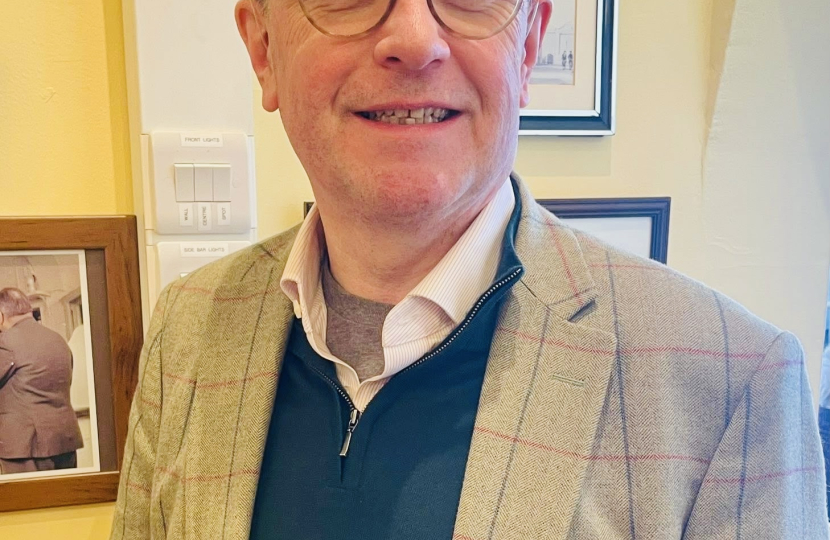
Speech by Rt Hon Sir Robert Buckland KBE KC
Conference on Major Parish Churches
St John the Evangelist, Iffley Road, Oxford, 10th June 2026
Thank you very much for your welcome.
It is a great pleasure to be here at St John the Evangelist, Iffley Road, and to have the opportunity to address this gathering in such a distinguished and welcoming setting.
Whenever I visit Oxford, I am struck by the way in which the city's churches tell the story of the Church's continuing presence in English life. We rightly think of the great college chapels, the University Church of St Mary the Virgin, and the rich ecclesiastical heritage that has shaped this city for centuries. But the story of the Church in Oxford is not told by famous buildings alone. It is also told by faithful parish churches such as St John's, embedded in their communities and serving them day by day.
Indeed, only a short distance from here stands the ancient church of St Mary the Virgin, Iffley, one of the finest examples of Norman parish church architecture in England. For nearly nine centuries it has stood as a witness to Christian faith, prayer and service. Generations have worshipped there through periods of immense social, political and cultural change. Its endurance reminds us that the Church's mission is measured not in years or even decades, but across centuries.
That continuity is one of the Church of England's greatest strengths.
As Third Church Estates Commissioner, I have come to appreciate even more deeply how important our church buildings are, not merely as historic assets but as living centres of worship, service and community. They are visible signs of the Church's commitment to every part of our nation and to every community we are called to serve.
As I arrived today, I was reminded that one of the great strengths of the Church of England is that it is rooted in place. We are not an institution that exists at a distance from the communities we serve. We are present in villages, towns, suburbs and cities. We accompany people through the milestones of life and, often, through its deepest challenges.
That parish presence is one of the Church's greatest gifts to the nation.
And it is from that foundation that we can properly understand the importance of our Major Parish Churches.
Although they operate on a different scale and face a distinctive set of opportunities and challenges, they are ultimately expressions of the same calling that animates a church like St John's and indeed St Mary, Iffley: to worship God, serve neighbour and bear witness to the Gospel in the heart of the community.
Major Parish Churches are among the most remarkable buildings in England. Magnificent in scale, rich in history and often of exceptional architectural significance. Yet their importance extends far beyond bricks, stone and stained glass.
They are places where people come to worship God.
They are places where communities gather in times of celebration and grief.
They are places where civic life finds expression.
They are places where music, education, heritage and social action come together.
And they are places that continue to proclaim the Christian faith in the heart of our towns and cities.
When I think of churches such as St Mary the Virgin here in Oxford, Sunderland Minster, St Mary Abbots in Kensington, St Andrew's Rugby, or Holy Trinity in Kendal, I see institutions that have become woven into the identity of their communities.
Many of them fulfil functions that cathedrals perform elsewhere. Some serve large urban populations without the benefit of cathedral status or resources. Others act as focal points for market towns and regional centres. All of them carry responsibilities that extend well beyond the normal expectations of parish ministry.
That is why the designation of Major Parish Church matters.
It recognises that these churches face a different order of challenge and opportunity from many others across the Church of England.
The very qualities that make them such assets can also make them difficult to sustain.
Large buildings require large budgets.
Historic fabric requires specialist care.
Extensive ministry requires capacity.
And all of this must be achieved in a climate of financial pressure and increasing demands upon clergy and volunteers.
Yet despite those challenges, I remain profoundly optimistic.
Throughout my public life I have seen that institutions endure when they continue to serve a clear purpose. Major Parish Churches have purpose in abundance.
The evidence can be seen in the work undertaken every day across the country. Food banks, debt advice, educational programmes, support for vulnerable people, concerts, exhibitions, civic commemorations, schools work and pastoral ministry. These churches are often among the busiest and most outward-facing institutions in their communities.
As a Christian, I believe that this reflects something fundamental about the Church's vocation.
The Church is called not merely to preserve an inheritance but to use it in service of others.
The parable of the talents reminds us that we are stewards, not owners. The question is not simply whether we preserve these great buildings, important though that is. The question is whether we enable them to fulfil the mission for which they exist.
That is why I have been so encouraged by the work of the Cathedral and Church Buildings Department.
Their approach recognises that conservation and mission are not competing priorities. They are partners.
Whether supporting projects in Cirencester, Bath, Warwick or elsewhere, the emphasis has rightly been upon helping churches adapt in ways that respect heritage while enabling contemporary ministry.
I know from my own experience as a lawyer that institutions can sometimes become trapped by false choices. Preservation versus change. Heritage versus mission. Tradition versus innovation.
The most successful projects reject those binaries.
They recognise that churches have always evolved. The medieval builders who created these magnificent structures were not erecting museums. They were creating living places of worship for future generations.
Our responsibility is to do likewise.
There is another challenge that deserves particular attention: sustainability.
Nearly half of all Major Parish Churches are among the highest carbon-emitting buildings in the Church of England's estate.
At first glance that may appear daunting.
But I prefer to see it as an opportunity.
The Christian doctrine of creation places stewardship at the heart of our responsibilities. If Major Parish Churches can lead the way towards net zero, they will demonstrate that our commitment to the environment is not an optional add-on but a natural expression of our faith.
Moreover, because these churches are so visible, their example will resonate far beyond their own congregations.
Leadership matters.
And these churches are uniquely placed to provide it.
I am also encouraged by the growing work being undertaken through the Major Churches Network and the important research being carried out with the University of York.
One of the striking findings emerging from that work is that many people across the Church remain unclear about what the Major Parish Church designation actually means.
That needs to change.
Recognition must be accompanied by understanding.
And understanding must be accompanied by practical support.
The reality is that these churches represent a special category of ministry and stewardship. Their clergy and lay leaders often carry responsibilities that resemble those of cathedral teams whilst operating with significantly fewer resources.
I have long believed that one of the Church of England's greatest strengths is its parish system. It is one of the most remarkable institutional networks in our national life. It means that the Church is present in every community, not merely where it is convenient or financially advantageous to be.
Major Parish Churches are among the most visible expressions of that commitment.
They are often the places where the Church encounters thousands of people who may never attend a Sunday service elsewhere.
Visitors enter because of architecture and discover faith.
Tourists arrive seeking history and encounter worship.
Concert-goers come for music and find community.
That is an opportunity we should cherish.
As someone who grew up in Wales singing in church choirs and who retains a lifelong love of sacred music, I am particularly conscious of the way these churches nurture beauty. In an increasingly noisy and transactional world, they provide spaces where people can encounter transcendence, often without even realising what they are seeking.
George Herbert’s memorable words from “Let All The World In Every Corner Sing” come to mind: “The church with Psalms must shout, no door can keep them out. But above all the heart must bear the longest part”. Stone AND soul, then are our Mission.
Yet buildings matter because they house and express the life of that congregation.
They speak of permanence in a transient age.
They connect generations.
They embody memory.
And they point beyond themselves to something greater.
As Christians, we know that our ultimate confidence rests not in buildings but in the living God. Yet we also know that these places have been instruments of grace for centuries.
The challenge before us is therefore both practical and spiritual.
We need investment.
We need expertise.
We need stronger awareness within diocesan structures of the distinctive needs of Major Parish Churches.
We need training and support for those entrusted with their leadership.
We need continued partnership with heritage bodies, local authorities and the wider community.
But above all, we need confidence.
Confidence that these churches have a future.
Confidence that they remain relevant.
Confidence that they can continue to serve as centres of worship, mission and community for generations to come.
Here in Oxford, surrounded by the evidence of centuries of faith and learning, that confidence should come naturally.
For these churches have survived war, plague, political upheaval, social transformation and profound cultural change.
They endure because they continue to meet a human need that has not changed: the need for meaning, belonging, beauty and hope.
Our task is to ensure that they continue to do so, and at the Church Commissioners, our Cathedrals and Major Churches team, led by Emily Gee, is here to provide support and advice.
If we succeed, then Major Parish Churches will remain what they have long been: not relics of the past but living witnesses to faith at the heart of English public life.
Thank you very much.