‘Unconstitutional’ to stop ministers having view on assisted dying
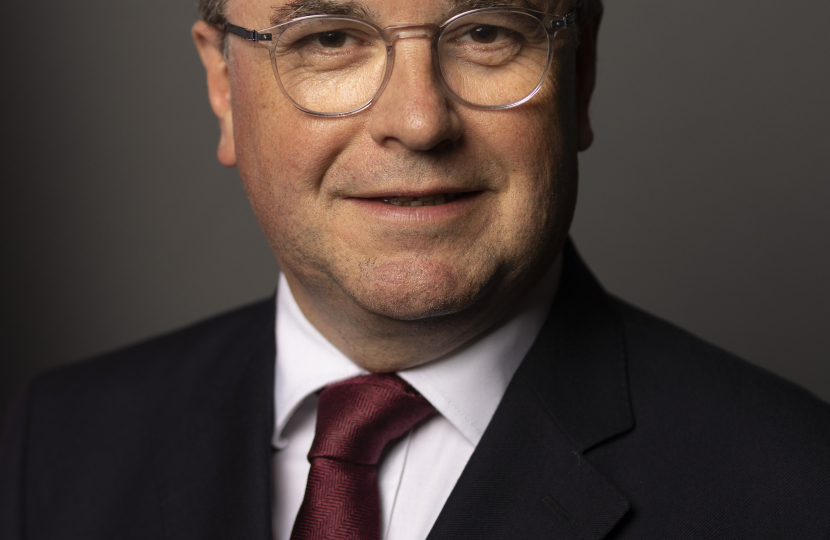
The former justice secretary Robert Buckland said it was important for departments to be able to consider the impact of the bill
Geraldine Scott, Senior Political Correspondent, Oliver Wright, Policy Editor, and Chris Smyth, Whitehall Editor
Monday November 18 2024, 6.50pm, The Times
Banning Cabinet ministers from giving their view on assisted dying is “unconstitutional” and could mask unintended consequences, the former justice secretary has said.
Robert Buckland accused Simon Case, the Cabinet secretary, of breaking Whitehall rules by imposing neutrality on ministers over the vote, as Sir Keir Starmer said he would give his view by voting on the bill.
Case, the country’s most senior civil servant, had told all ministers they should “not take part in the public debate” but some — most notably Wes Streeting, the health secretary — have set out their views.
Streeting has been accused of crossing a line by stating his opposition to the assisted dying proposals and has asked his officials to carry out a cost analysis of any change, suggesting it could cost the NHS more if a new law was brought in.
Starmer on Monday appeared to rebuke the health secretary and said: “I certainly won’t be putting pressure on anyone in relation to the way they vote, because I do respect the two different camps.
“Every MP will have to make his or her mind up and decide what they want to do when that vote comes a week on Friday.”
But he said he intended to vote at the bill’s second reading on November 29th.
On Monday a cross-party group of undecided MPs questioned non-partisan experts on palliative care, law and public opinion, as questions mounted about the practicalities of changing the law.
In a letter to Case, seen by The Times, Buckland said ministers needed to be allowed to “consider the impact” and said Streeting was right to implement a review in his department.
Buckland, who has previously opposed any change to the law, said: “This policy and legal work is absolutely essential. Unfortunately, the effect of your letter has been to make it harder for ministers to fulfil their obligations.”
He said it was the first time such a letter was written on a matter of conscience, and while it was correct that the government was neutral he said: “I am concerned that this letter has confused neutrality as to the principle of assisted dying with neutrality as to this particular bill.”
He added: “It might, for example, be the case that some of the proposed safeguards (such as the involvement of the courts) cannot be delivered either for reasons of resources or propriety. If that is the position, parliament ought to know ahead of the second reading so that it does not end up voting for the bill on false pretences.”
In a separate letter Robert Jenrick, the shadow justice secretary, said the courts would not have the capacity to deal with assisted dying cases.
Writing to Shabana Mahmood, the incumbent justice secretary, he said: “The entire premise of the bill hinges on judges being able to make rigorous and well-considered decisions in a timely manner.”
Kim Leadbeater, right, who proposed the bill, and Rebecca Willcox, Dame Esther Rantzen’s daughter, visit trees bearing 650 dying wishes placed in Parliament Square by Dignity in Dying, a campaign group supporting the legalisation of assisted dying.
He said he had spoken to senior members of the judiciary who believed the bill to be “unworkable” and added: “There is a real risk that those considering assisted dying will have passed away before a decision is made.”
Jenrick said the Family Division, where it had been assumed the cases would be heard, had only 19 judges, and asked if the Ministry of Justice had made any assessment of the workload or whether the cases could be heard elsewhere. He said a conscience clause should also be included for judges, as well as doctors, to allow them to opt out of such cases.
MPs will get their first opportunity to indicate their views on the issue when the bill returns to parliament next week.
Bridget Phillipson, the education secretary, said on Monday morning that she would vote against, saying her views had not changed since the issue was last debated in 2015.
Phillipson also suggested that Streeting should not have spoken out, telling Times Radio that while ministers would want to discuss the impact of the policy “it’s usually best if those discussions are done so behind the scenes so that people can air, privately, concerns that they might have on all sides of the argument”.
Starmer said it was important that no one in government attempted to sway the debate before the vote. “The government is neutral, and it’s a free vote, and it’s very important that it remains a free vote because people feel very strongly about this,” he said. “That’s not a political divide. It’s a sort of individual divide.”
The prime minister said he was aware of the strength of opinion on the issue. When he was director of public prosecutions he issued guidance indicating that anyone acting with compassion to help end the life of someone who had freely decided to take their own life would be unlikely to face criminal charges.
He said: “I’ve always said getting the balance right is crucially important. That’s why there’ll be a free vote.”
Kim Leadbeater, the Labour MP who has put forward the assisted dying bill, on Sunday urged politicians to stop dominating the debate, saying that concentrating on their views would “detract from the issues”.
It came after Louise Haigh, the transport secretary, said she would vote for the bill while Angela Rayner, the deputy prime minister, let it be known she would vote against.
The Cabinet Office received Buckland’s letter on Monday evening and intends to respond. It is understood the Cabinet Secretary believes the proper process was followed as set out in the ministerial code.